
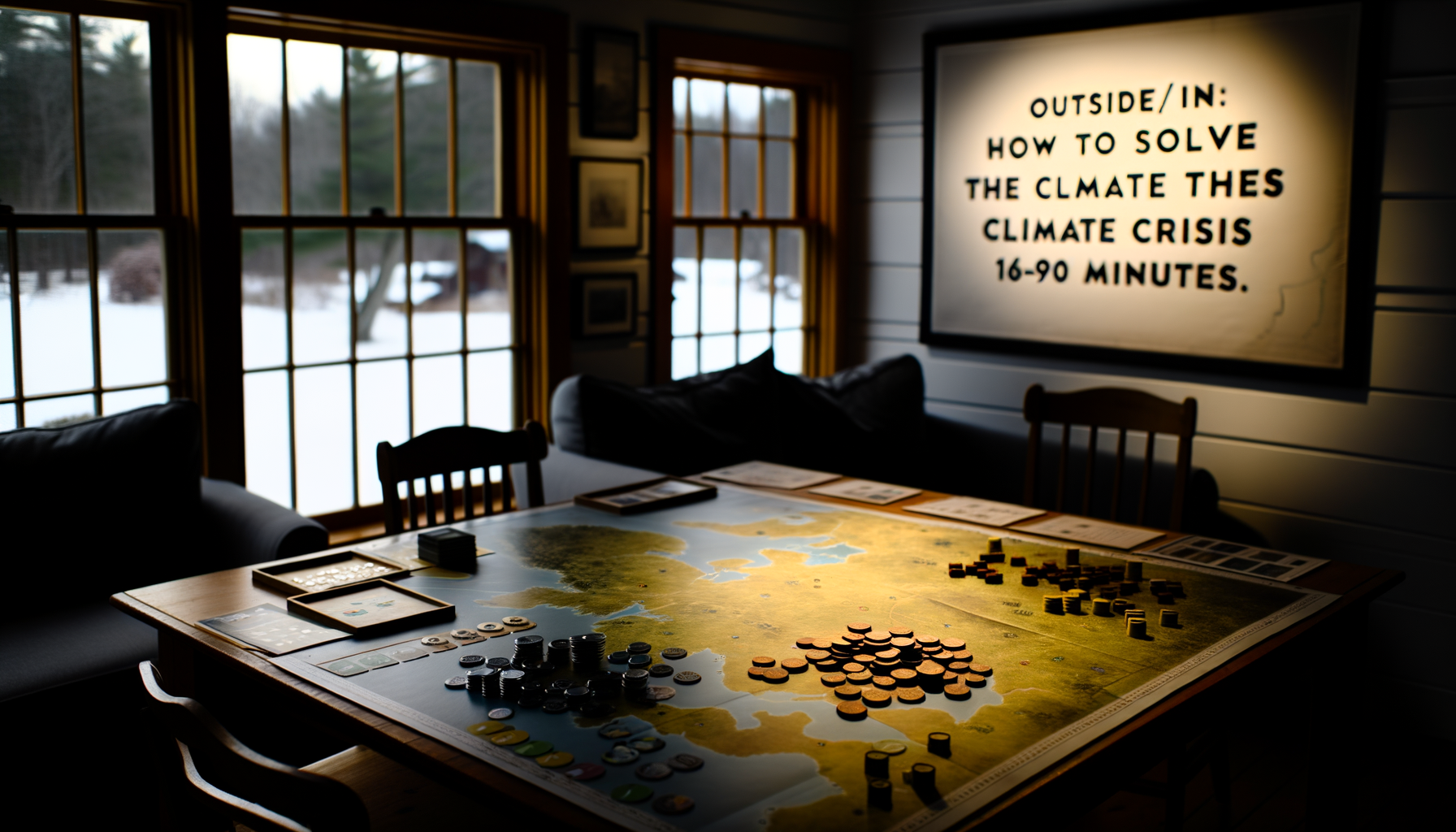
In a quiet studio tucked away in New Hampshire, a group of friends gathered around a table scattered with tokens, cards, and a sprawling game board. The game they were playing wasn’t about conquest or fantasy. It was about climate change. “Daybreak,” a cooperative board game designed to simulate the global effort required to combat the climate crisis, offered them a chance to step into the shoes of policymakers, scientists, and activists. For ninety minutes, they weren’t just rolling dice, they were navigating the tangled web of energy transitions, international diplomacy, and ecological tipping points.
The premise of “Daybreak” is deceptively simple. Players represent different regions of the world, each with its own challenges and resources. Together, they must reduce emissions, adapt to climate impacts, and build resilient societies before the planet crosses irreversible thresholds. But beneath the surface, the game is a layered meditation on systems thinking, collective action, and the emotional weight of environmental stewardship. It’s not just about winning, it’s about understanding.
What makes “Daybreak” remarkable isn’t just its mechanics, though they are thoughtfully crafted. It’s the way it invites reflection. Unlike traditional games that reward individual achievement, “Daybreak” demands cooperation. Players must negotiate trade-offs, share resources, and confront hard truths. There’s no single hero, no lone savior. Success hinges on empathy and coordination. In that sense, the game mirrors the real-world climate challenge more closely than any policy memo or scientific model.
The game’s designer, known for creating “Pandemic,” approached “Daybreak” with a clear intention: make climate action engaging without trivializing it. That balance is delicate. Climate change is not a game, and the stakes are far higher than any tabletop scenario. Yet by translating abstract concepts into tangible decisions, “Daybreak” offers a rare opportunity to internalize the complexity of the crisis. It’s one thing to read about carbon budgets and feedback loops. It’s another to feel the tension of choosing between short-term relief and long-term resilience.
In the Upper Valley, where forests stretch across rolling hills and rivers carve through granite, the climate conversation often feels both urgent and intimate. We see the changes in our seasons, the shifts in bird migrations, the stress on maple trees. But we also see community, neighbors organizing compost programs, students advocating for divestment, farmers experimenting with regenerative practices. “Daybreak” taps into that spirit. It doesn’t pretend to solve the crisis. Instead, it cultivates the mindset we need to face it: curiosity, cooperation, and courage.
One of the game’s most poignant features is its treatment of climate impacts. As the game progresses, players draw “crisis” cards that represent real-world events—heatwaves, floods, political unrest. These aren’t random obstacles. They’re reminders of vulnerability. And they force players to adapt, often at great cost. In doing so, the game underscores a central truth: climate change is not a distant threat. It’s a lived reality, unevenly distributed and deeply personal.
Yet “Daybreak” doesn’t dwell in despair. It offers pathways to hope. Players can invest in clean energy, strengthen social safety nets, and build international alliances. These actions aren’t just strategic, they’re symbolic. They reflect the choices we face as a global community. And while the game ends after a set number of rounds, its lessons linger. Players leave with a deeper appreciation for the interdependence of systems, the fragility of progress, and the power of collective will.
In classrooms, “Daybreak” could become a teaching tool. In living rooms, it might spark conversations. In policy circles, it could serve as a metaphor. But its greatest value lies in its accessibility. Climate discourse is often dominated by jargon and polarization. “Daybreak” cuts through that noise. It invites people in. It says: come play, come learn, come care.
Of course, no game can capture the full scope of the climate crisis. The real world is messier, more unpredictable, and less forgiving. But games have always been a way to rehearse reality, to test ideas, to imagine futures. “Daybreak” doesn’t offer answers. It offers questions. And in a time when so much feels uncertain, that may be its greatest gift.
As the players in New Hampshire packed up the game, their conversation drifted from strategy to stories. One spoke of a recent flood in her hometown. Another shared his worries about rising energy costs. They weren’t just talking about the game anymore. They were talking about life. And that, perhaps, is the quiet power of “Daybreak.” It turns climate change from a headline into a dialogue, from a crisis into a shared journey.
In the end, solving the climate crisis will require more than 90 minutes. It will demand decades of effort, innovation, and resolve. But if a board game can help us begin that journey, with open minds and open hearts, then it’s worth playing. Because every conversation, every insight, every moment of connection brings us one step closer to a world where the sun rises not just on a new day, but on a new way of living.