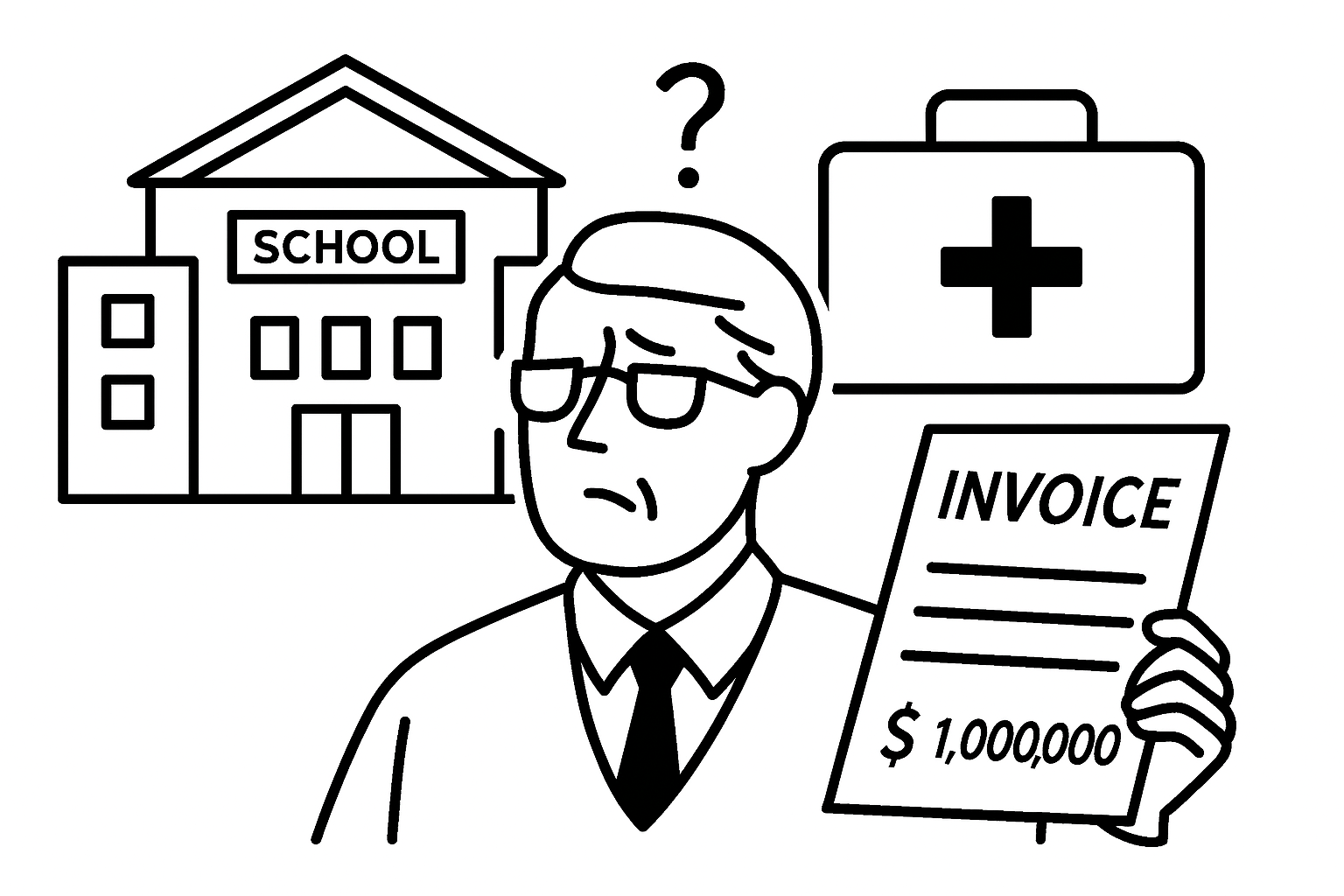
In Somersworth, New Hampshire, Superintendent John Shea sat with a $672,000 invoice and no clear way to pay it. The bill had arrived suddenly, part of a $30 million shortfall passed down to 65 school districts by their nonprofit health insurer, SchoolCare. Shea’s district, already stretched thin, had no reserves to absorb the cost. “We are down to the bone,” he said. That phrase echoed across the state this week, as administrators scrambled to explain what this meant for their schools, their staff, and the families they serve.
Health care costs are rising everywhere, but when they hit public schools, the impact is immediate and deeply personal. Teachers, nurses, custodians, and aides, people who keep schools running, are now caught in the crosshairs of a financial crisis they didn’t cause. The invoices, which range from $1,000 to $2 million, landed without warning. They’re not part of regular premiums, which already increased this year. They’re an emergency assessment, triggered by a spike in claims and pharmacy costs that SchoolCare says it couldn’t have predicted. But for districts like Somersworth, prediction isn’t the issue. Survival is.
In Claremont, where the school district is already facing a $5 million deficit, the new bill adds nearly $870,000 to their burden. The district didn’t respond to requests for comment, but the silence speaks volumes. When budgets are already underwater, unexpected costs like this don’t just strain, they drown. And the ripple effects are felt far beyond the finance office. Hiring freezes are now on the table. So are cuts to programs, delays in repairs, and reductions in services that students rely on every day.
Pamela Walsh, president of the Concord School Board, called the $1.9 million invoice a “shock.” Concord has savings, but even that cushion may not be enough. Walsh said the district will do everything it can to avoid layoffs, but acknowledged that staff will feel the consequences. “There will be things that people will feel, especially people working in our schools,” she said. That’s not just a budgetary concern, it’s a public health one. When schools cut back, it’s often the support systems that go first. Mental health counselors. Special education aides. Nutrition programs. These aren’t luxuries. They’re lifelines.
In Belmont and Canterbury, the Shaker Regional School District owes $622,000. Superintendent Michael Tursi said they might use surplus funds that would have gone back to taxpayers. That’s a tough call. Returning surplus is a way districts show fiscal responsibility and community partnership. But when health care costs explode, those values collide. Tursi described the situation as “not great,” but said the district’s consistent budgeting gives them options. Still, options don’t erase the stress. They just delay it. The ongoing federal shutdown has only compounded the financial uncertainty facing these districts.
Lebanon’s Superintendent Amy Allen said her district will use unspent health care funds and savings to cover its $1 million bill. That means less money for building repairs and special education costs that are already higher than expected. Allen also mentioned the possibility of switching health coverage models, like some larger districts have done. But self-insuring isn’t a quick fix. It requires infrastructure, risk tolerance, and long-term planning. For smaller districts, it’s often out of reach.
Behind every invoice is a person. A teacher wondering if their benefits will change. A school nurse trying to stretch supplies. A parent hoping their child’s IEP won’t be disrupted. These aren’t abstract budget lines. They’re real lives. And the timing couldn’t be worse. The school year is underway. Contracts are signed. Students are settling in. To suddenly shift gears, to freeze hiring, cancel programs, or cut services, means disrupting the very stability that schools work so hard to create.
Lisa Duquette, executive director of SchoolCare, said the bills were calculated based on premiums and that the shortfall was unavoidable. She emphasized that the organization has returned nearly $100 million in surplus funds over the years. But this year, the math didn’t work. And while transparency is appreciated, it doesn’t soften the blow. Districts weren’t given time to prepare. They weren’t given options. They were given invoices.
This isn’t just a New Hampshire problem. It’s a snapshot of a national crisis. Health care costs are rising faster than public budgets can keep up. And when insurers pass those costs down, it’s public institutions, schools, libraries, clinics, that bear the brunt. The people who work in these spaces often do so out of commitment, not compensation. They accept modest pay in exchange for stability, benefits, and purpose. When that balance is disrupted, it’s not just a financial issue. It’s a moral one.
What happens next will depend on each district’s resources, leadership, and community support. Some may find creative solutions. Others may face painful choices. But all will need to reckon with the fragility of a system that can be upended by a single invoice. And as Superintendent Shea warned, this isn’t a one-time event. It’s a symptom of a larger issue. If we don’t address the root causes, rising pharmaceutical costs, lack of preventive care, opaque pricing structures, we’ll be here again. Next year. And the year after.
For now, the focus is on triage. On keeping schools open, staff supported, and students safe. But the deeper work lies ahead. It’s in policy rooms, budget hearings, and community forums. It’s in asking hard questions about how we fund public health and who pays the price when systems fail. And it’s in remembering that behind every dollar is a person. A student. A teacher. A neighbor. That’s where the story begins. And where it must return.
For more education and New Hampshire policy coverage, visit our Campus section.