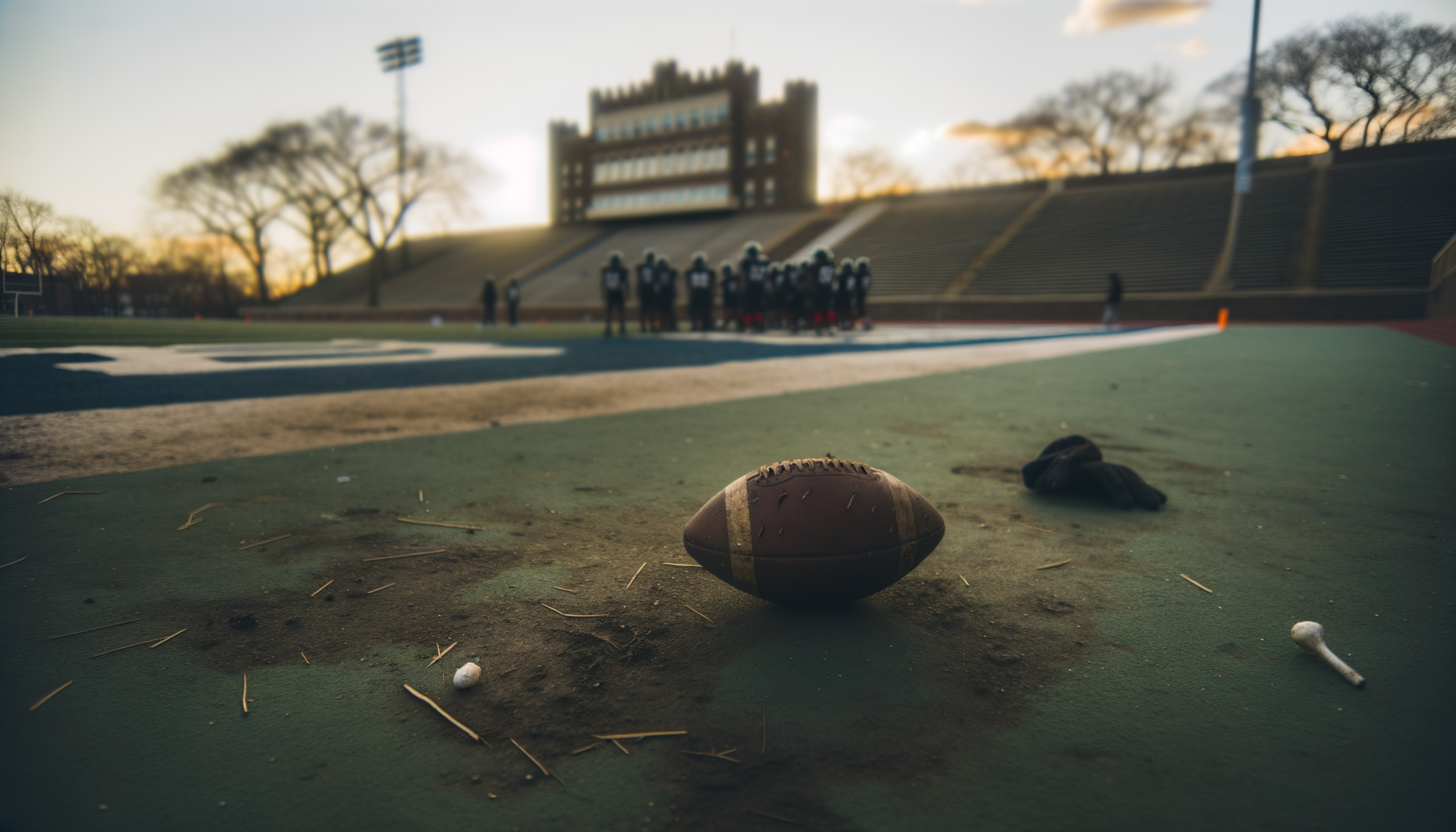
It wasn’t just a loss. It was a collapse. A 21-point shutout at Harvard Stadium that felt less like a football game and more like a slow-motion unraveling of everything Dartmouth had been building this season. No touchdowns. No rhythm. No answers. Just a long bus ride home and a scoreboard that refused to blink.
Let’s start with the numbers, because they don’t lie, even when you wish they would. Dartmouth had 10 first downs. Harvard had 23. Dartmouth ran for 58 yards. Harvard ran for 209. Dartmouth had 2 turnovers. Harvard had none. And the most damning stat of all? Zero points. Goose egg. Nada. The last time Dartmouth got shut out like this was over a decade ago, and even then, it didn’t feel this bleak.
The game opened with a flicker of hope. A couple of decent defensive stops. A few short gains. Maybe, just maybe, this would be one of those gritty Ivy League slugfests where nobody scores and everyone leaves bruised but proud. But then Harvard started cooking. Quarterback Charles DePrima looked like he’d been studying Dartmouth’s defense like it was a midterm. He threw for 165 yards, ran for 89 more, and made it look easy. Too easy. Like varsity vs. JV easy.
Meanwhile, Dartmouth’s offense looked like it was stuck in a time loop. Quarterback Nick Howard couldn’t find a rhythm. The offensive line couldn’t hold the pocket. Receivers couldn’t get separation. And the play-calling? Let’s just say it felt like someone hit shuffle on a playlist of short-yardage runs and incomplete passes. There was no tempo, no urgency, no spark. Just a slow drift into irrelevance.
And then there’s the defense. Usually the backbone of this team. The unit that keeps games close even when the offense sputters. But on Saturday, they got outmuscled, outpaced, and out-thought. Harvard’s offensive line opened lanes like they were hosting a highway expansion project. Dartmouth’s linebackers looked hesitant. The secondary got burned. And the tackling? Let’s just say it was more interpretive dance than contact sport.
But here’s the thing. This wasn’t just about execution. It was about identity. Dartmouth football has prided itself on grit, discipline, and a kind of quiet swagger. The kind that doesn’t need flashy plays or viral highlights. Just solid football. Smart football. But against Harvard, that identity cracked. The team looked unsure. Passive. Like they were waiting for someone else to take control. And nobody did.
Head coach Buddy Teevens, who returned to the sidelines this season after a long recovery, has always emphasized fundamentals. Ball security. Situational awareness. Playing smart. But this game felt like a betrayal of that philosophy. The penalties were sloppy. The clock management was off. And the body language? Defeated by halftime.
Of course, one game doesn’t define a season. Dartmouth still has talent. Still has leadership. Still has a shot at redemption. But this loss, this particular kind of loss, leaves a mark. It forces a reckoning. Not just with strategy and personnel, but with culture. What kind of team does Dartmouth want to be? Because right now, they look like a team caught between eras. Between the old-school Ivy League grind and the new wave of speed, aggression, and adaptability.
And let’s talk about Harvard for a second. Because credit where it’s due. They played like a team with something to prove. Fast, physical, and focused. Their defense swarmed. Their offense flowed. And their coaching staff clearly did their homework. This wasn’t just a win. It was a statement. A reminder that in the Ivy League, dominance isn’t about tradition. It’s about evolution.
Back in Hanover, the mood is tense. Fans are frustrated. Players are introspective. And the coaching staff is probably staring at game film like it’s a horror movie. There’s still time to course-correct. Still games to play. But the margin for error just got a lot thinner. And the questions, about leadership, about identity, about direction, just got a lot louder.
So where does Dartmouth go from here? They regroup. They retool. They remember who they are. Or at least who they want to be. Because football, like any good story, is about arcs. About setbacks and comebacks. And if Dartmouth wants to write a better ending, they’ll need to start with a better beginning. Fast.
For now, the scoreboard says 21-0. But the real score? That’s still being written. In locker rooms. In practice fields. In quiet moments of reflection. Because sometimes, the biggest losses aren’t about points. They’re about perspective. The Big Green would bounce back with a home win over Princeton the following week.