
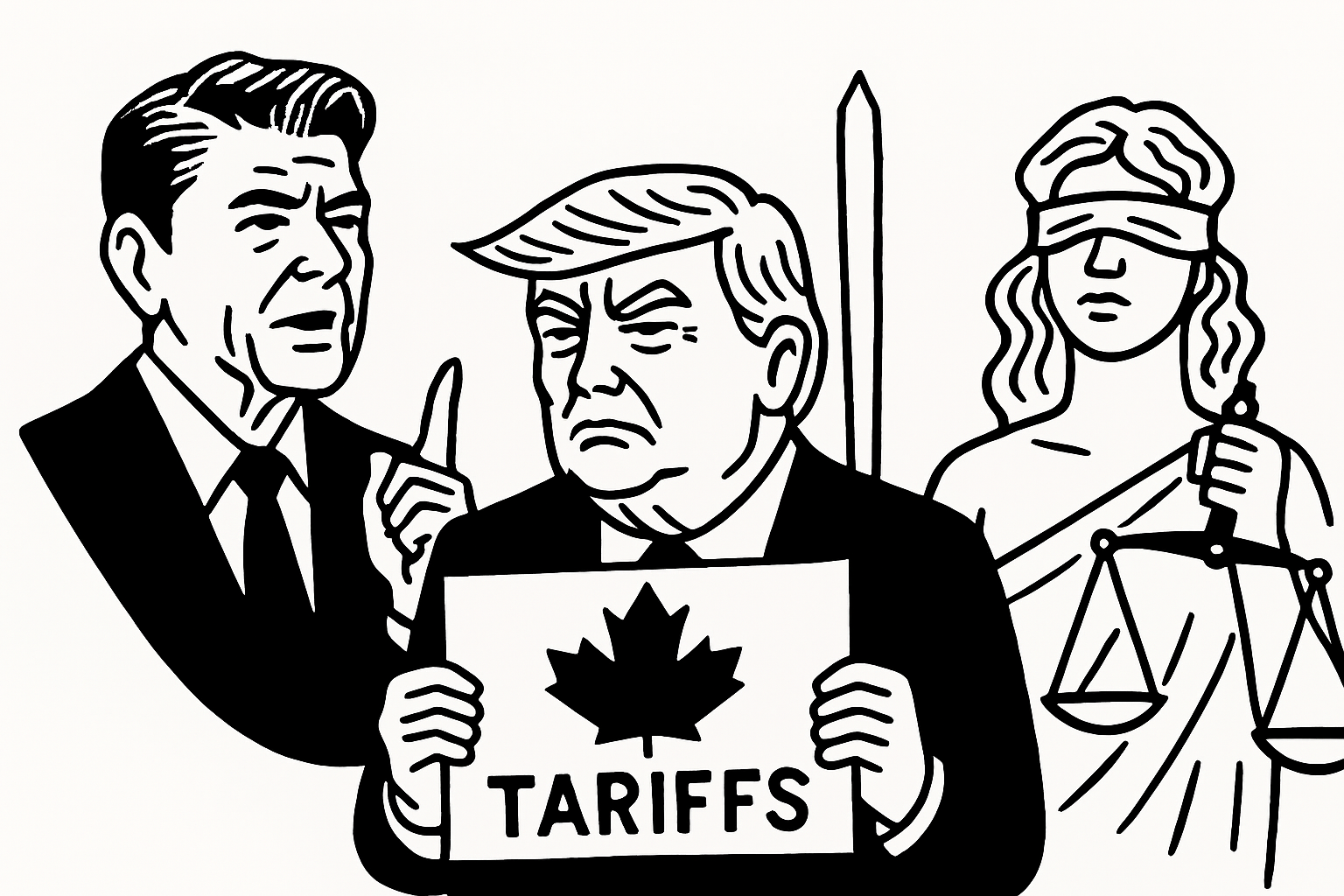
The latest rupture in U.S.-Canada relations unfolded not in a negotiation room, but on a television screen. A political advertisement aired in the United States, funded by Ontario’s provincial government, featured archival footage of President Ronald Reagan voicing support for free trade. The ad, intended to sway American public opinion against tariffs, triggered a swift and severe reaction from President Donald Trump, who announced the immediate termination of all trade negotiations with Canada. The move, delivered via a late-night post on Truth Social, was not only unexpected but emblematic of a broader shift in the administration’s approach to international commerce.
Trump’s post accused Canada of fraudulently misrepresenting Reagan’s stance, calling the ad “fake” and “egregious.” He declared that tariffs were essential to national security and economic strength, and that Canada had “cheated and got caught.” The Ontario government, which had allocated $75 million for the ad campaign, responded with a promise to pause the campaign starting Monday, though the ad would continue airing through the weekend, including during the Major League Baseball World Series. Ontario Premier Doug Ford defended the campaign’s message, stating that Reagan’s words underscored the value of unity and open markets.
This episode is not merely a diplomatic spat over a television commercial. It reflects a deeper ideological divide over trade policy that has simmered beneath the surface of North American relations for years. Trump’s administration has consistently championed protectionist measures, arguing that tariffs safeguard American industries from unfair competition. Canada, by contrast, has leaned into multilateralism and free trade, often invoking historical alliances and shared values to bolster its position. The Reagan ad, while provocative, was a calculated appeal to American conservatives who revere the former president’s legacy. By using Reagan’s own words, Ontario sought to challenge Trump’s tariff agenda on its home turf.
The fallout from Trump’s decision could be significant. Trade between the United States and Canada amounts to hundreds of billions of dollars annually, with deeply integrated supply chains spanning automotive, agriculture, energy, and technology sectors. Disruptions to these flows could have ripple effects across both economies. Canadian exporters, already grappling with previous rounds of tariffs on steel and aluminum, now face renewed uncertainty. American businesses that rely on Canadian inputs may encounter delays, cost increases, or logistical complications. The termination of talks also casts doubt on the future of bilateral agreements that were being renegotiated or expanded.
Beyond the economic implications, the incident raises questions about the role of political messaging in shaping international policy. The Ontario ad was not a rogue initiative; it was a strategic communication effort backed by public funds and designed to influence a foreign electorate. While such tactics are not unprecedented, they tread a fine line between advocacy and interference. Trump’s reaction suggests that he views the ad not as a policy critique but as a hostile act. This interpretation, whether justified or not, underscores the fragility of diplomatic norms in an era of hyper-personalized politics.
The timing of the announcement adds another layer of complexity. The United States is preparing for a high-stakes meeting with Chinese President Xi Jinping, scheduled for early November. The Trump administration’s posture toward China has been similarly combative, with tariffs and technology restrictions forming the backbone of its strategy. By severing talks with Canada just weeks before engaging with China, Trump signals a broader recalibration of trade priorities. It is unclear whether this move is intended to project strength, consolidate negotiating leverage, or simply reflect frustration with perceived slights.
In Canada, the reaction has been measured but firm. Officials have emphasized the importance of maintaining dialogue and expressed hope that the pause in advertising will pave the way for renewed engagement. However, there is little indication that Trump is inclined to reverse course. His rhetoric suggests a zero-tolerance approach to what he perceives as disrespect or manipulation. This stance, while popular among segments of his base, complicates the task of building durable trade frameworks in a globalized economy.
The Reagan ad controversy also invites reflection on the legacy of past leaders and how their words are repurposed in contemporary debates. Reagan’s views on trade were nuanced, shaped by Cold War dynamics and a belief in market liberalization. To invoke his voice in opposition to tariffs is both a tribute and a provocation. It challenges current policymakers to reconcile historical ideals with present-day realities. For Trump, whose brand is built on disruption and defiance, the ad may have struck a nerve precisely because it appealed to a conservative icon to undermine his agenda.
As the dust settles, stakeholders on both sides of the border are left to assess the damage and chart a path forward. Businesses, consumers, and policymakers must navigate a landscape where trade policy is increasingly subject to the whims of political theater. The Ontario ad may fade from screens, but its impact will linger in boardrooms and briefing books. Trump’s decision to terminate talks over a televised message reveals the extent to which symbolism now shapes substance in international affairs.
Whether this episode marks a temporary setback or a lasting rupture remains to be seen. What is clear, however, is that the intersection of media, politics, and economics has become a volatile arena. In this environment, even a 30-second clip can derail months of negotiation and reshape the contours of diplomacy. The challenge for both nations is to find common ground amid the noise, and to remember that trade, at its core, is not just about goods and services, it is about trust, cooperation, and the shared pursuit of prosperity. For more technology and policy coverage, follow the Dartmouth Independent.