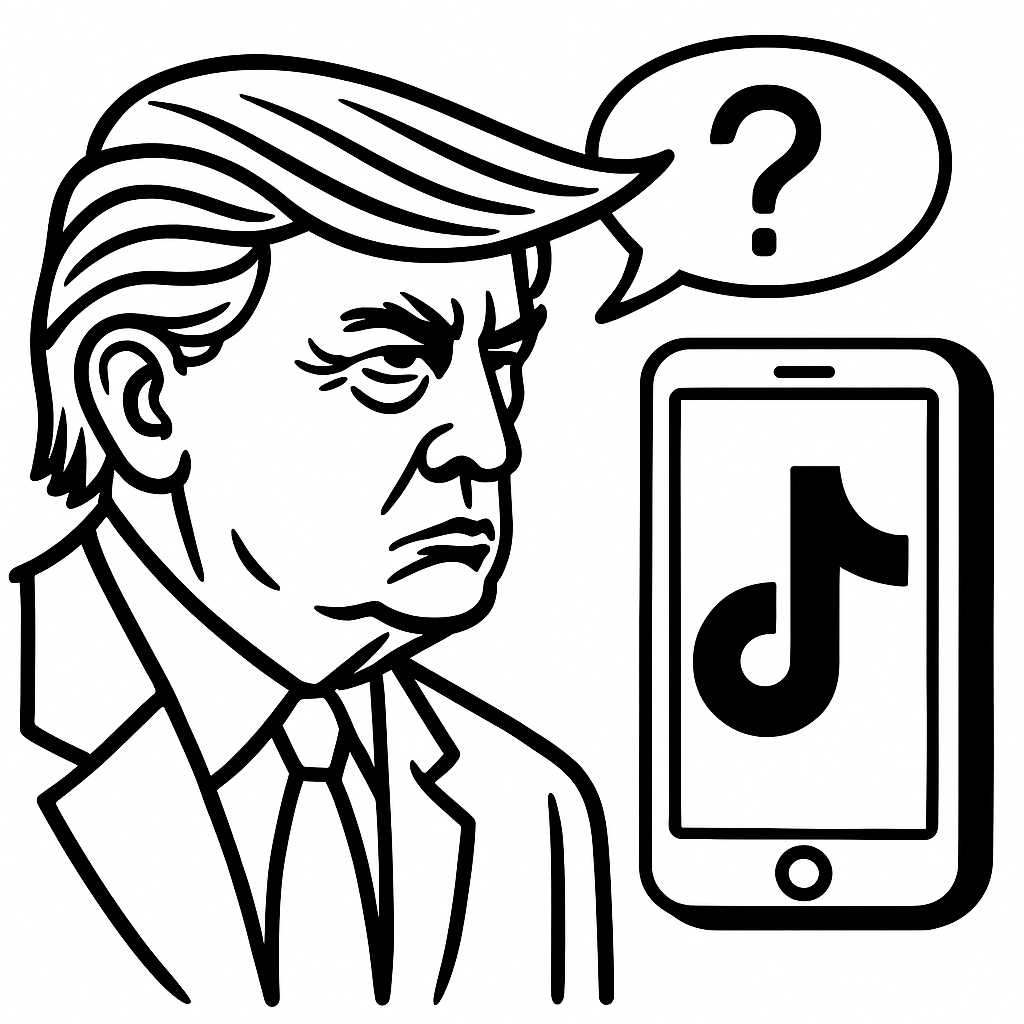
In a move that has stirred both political and economic circles, President Donald Trump has approved a sweeping deal that reshapes the future of TikTok in the United States. The executive order, signed late last month, greenlights a divestiture plan that transfers majority control of the app’s U.S. operations to a consortium of American investors. The implications of this maneuver extend far beyond the realm of social media, touching on national security, digital sovereignty, and the evolving dynamics of the creator economy.
The deal, valued at approximately $14 billion, positions a new joint-venture entity to oversee TikTok’s U.S. business. ByteDance, the Chinese parent company, will retain less than 20 percent ownership, satisfying the requirements of a 2024 bipartisan law that mandated divestment or risked a nationwide ban. The law, upheld unanimously by the Supreme Court, was designed to mitigate concerns over foreign influence and data privacy. With this transaction, the administration claims to have resolved those concerns, though critics remain skeptical.
At the heart of the arrangement is a roster of high-profile investors, many of whom are closely aligned with the president. Oracle’s Larry Ellison, Dell Technologies’ Michael Dell, and media magnate Rupert Murdoch are among the names floated as key stakeholders. Venture capital firms such as Andreessen Horowitz and Silver Lake are also expected to play significant roles. Oracle, in particular, will serve as the platform’s security provider, tasked with monitoring data flows and safeguarding user information within a U.S.-based cloud infrastructure.
The algorithm that powers TikTok’s addictive content feed, the so-called “secret sauce” behind its meteoric rise, will be retrained and operated domestically. This recalibration is intended to ensure that U.S. content remains free from manipulation or surveillance. The move comes amid broader government efforts to deploy technology for identification and tracking purposes. According to Vice President JD Vance, who led the task force overseeing the deal, the algorithm will be continuously audited to prevent undue influence. The administration insists that this level of oversight is essential to protect American users and uphold the integrity of the platform.
Yet the political undertones of the deal are difficult to ignore. Trump has openly acknowledged his preference for MAGA-aligned content and expressed a desire to see the algorithm reflect those values. While he conceded that a fully partisan feed is unlikely, the potential for ideological bias remains a concern among creators and users. TikTok has become a dominant source of news and information for younger Americans, with nearly half of users under 30 relying on the app for current events. Any shift in content moderation or algorithmic priorities could have far-reaching consequences for public discourse.
The creator economy, which has flourished on TikTok’s platform, faces a period of uncertainty. Influencers who built careers on the app are now grappling with the possibility of diminished reach and altered engagement metrics. V Spehar, a prominent TikToker with millions of followers, voiced apprehension about the platform’s future. She warned that if the algorithm becomes overtly biased, many creators will migrate to alternatives like YouTube, Meta platforms, or Substack. The sentiment is echoed across the influencer community, where fears of censorship and reduced visibility are mounting.
Economically, TikTok’s impact has been substantial. A 2023 report by Oxford Economics estimated the app contributed $24.2 billion to U.S. GDP and supported over 224,000 jobs. The influencer industry itself is projected to grow from $250 billion to nearly $480 billion by 2027, according to Goldman Sachs. Any disruption to TikTok’s ecosystem could ripple through advertising, brand partnerships, and small business outreach. For many entrepreneurs, the app is not just a marketing tool but a lifeline to consumers. The geopolitical dimension of the deal adds another layer of complexity. Trump confirmed that Chinese President Xi Jinping approved the framework during a recent phone call, signaling a rare moment of cooperation. However, formal regulatory signoff from Beijing remains pending, and analysts caution that China’s bureaucratic apparatus could delay implementation. The Asia-Pacific Economic Cooperation Summit next month may offer further clarity, as both leaders are expected to meet and discuss the arrangement.
While the administration touts the deal as a victory for national security and economic continuity, critics argue that it sets a precedent for politicized tech governance. The notion of a social media platform being reshaped by executive fiat and handed to politically sympathetic investors raises questions about transparency and accountability. Moreover, the absence of ByteDance representatives at the signing ceremony underscores the transactional nature of the deal, which some view as more about optics than substance.
The road ahead for TikTok in the U.S. is paved with both opportunity and risk. If the new ownership structure succeeds in maintaining user trust and platform stability, it could serve as a model for future tech divestitures. But if the algorithm becomes a tool for ideological messaging or if creators abandon the app en masse, the fallout could be swift and severe. For now, the platform remains operational, and the countdown to the January 23 enforcement deadline continues.
In the broader context of digital policy, the TikTok deal reflects a growing tension between innovation and regulation. As governments grapple with the influence of tech giants, the balance between security and freedom becomes increasingly delicate. The outcome of this transaction will not only shape the future of one app but may also redefine the contours of digital sovereignty in the years to come. For related coverage on AI energy costs, see our Tech section.
For more technology coverage, visit our Tech section.