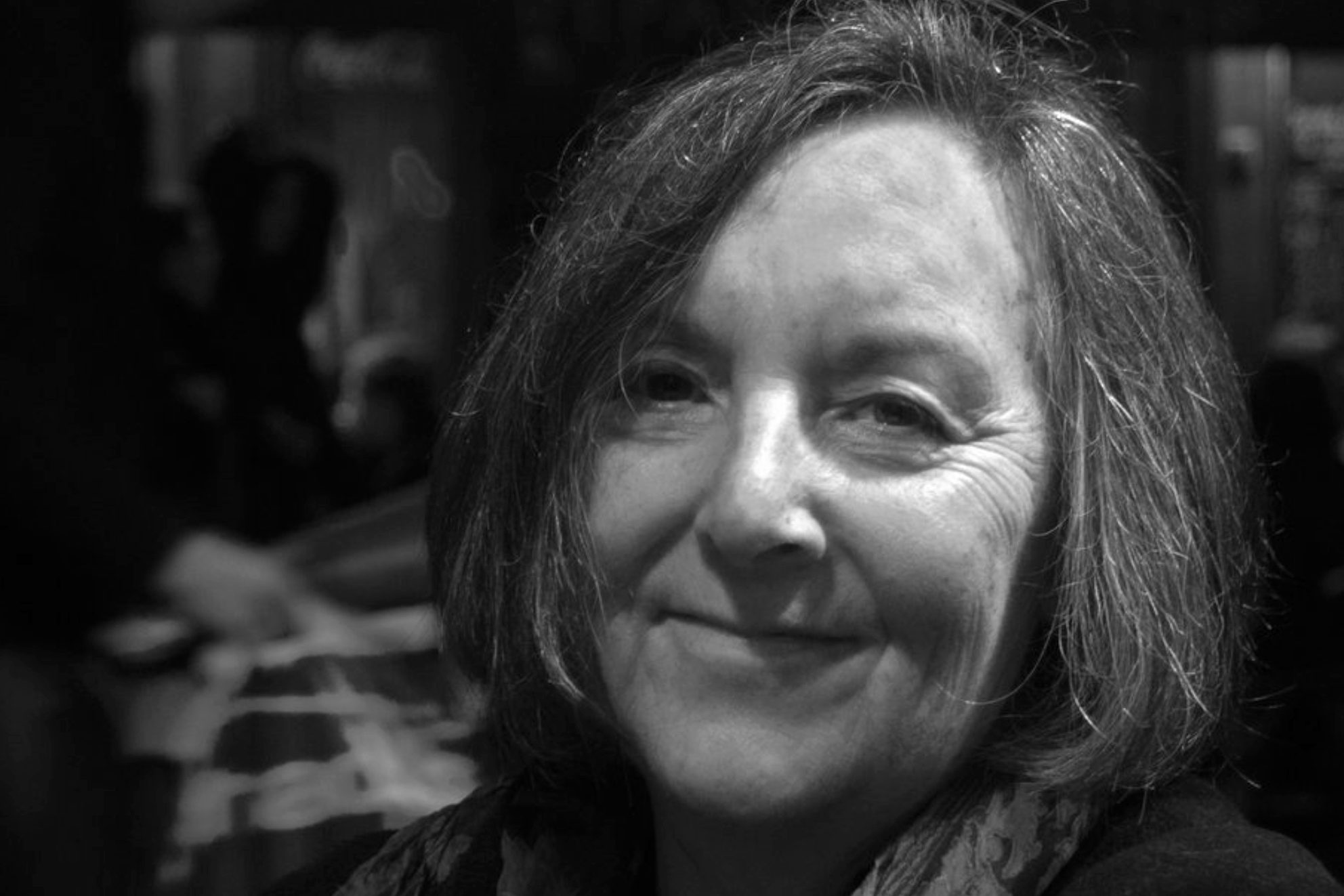
Terry J. Allen died April 10, 2026, at her home in East Montpelier, Vermont. She was 78.
Allen had been born in Fall River, Massachusetts, on November 24, 1947. The cause of death was Creutzfeldt-Jakob disease, a rare prion disorder that attacks the brain and progresses with brutal speed.
Her career stretched across journalism, photography, ceramics, and immigrant rights work. She wrote for The Guardian, Harper’s, The New York Times, The Nation, The Boston Globe, Salon, New Scientist, and In These Times, among others. Photography came to her later in life. It didn’t let go.
She wasn’t easy to categorize. Colleagues from the Upper Valley remembered a reporter who’d hold her ground outside an ICE detention facility and then go home and throw clay. She could charm a hostile official when she needed to, and she knew exactly when not to bother.
Allen grew up in Fall River with parents, Mordecai and Edith, who had conventional expectations. She didn’t share them.
In the late 1960s, she enrolled at the University of Chicago, dropped out within a year, and turned toward arts, travel, and the counterculture. She completed an intensive Japanese language program at Harvard, then booked passage on a freighter to Japan, arriving in Kyoto with a notebook, a growing interest in Zen practice, and almost no money.
In Kyoto, she studied under Nakazato Takashi, a ceramic artist of serious standing in Japan. She built her own studio outside the city, developing a practice that VTDigger described as fusing “rebellious Western creativity with Japan’s craft culture orthodoxy.” A Japanese artist who’d known her for decades said she “brought a new fresh wind into traditional Kyoto.” To cover her costs, Allen worked as a bar hostess, serving drinks and conversation to Japanese businessmen. She got around Kyoto on a Honda 350 motorcycle, sometimes in a kimono.
She stayed six years. In 1974, she returned to the United States and landed in Marshfield, Vermont, where she connected with Adele Godchaux Dawson, an herbalist known across the region. Vermont didn’t feel temporary. It wasn’t.
For the bulk of her writing career, Allen reported on topics that don’t generate a lot of institutional support: civil rights, corporate malfeasance, U.S. foreign policy, farmworker conditions. Her bylines weren’t soft. Her editors knew what they were getting. She could work a war zone and she’d done it.
In her later years, she directed most of her energy toward Vermont’s immigrant farmworkers, a population that the state’s dairy industry depends on heavily and that the state’s politics don’t protect adequately. Allen wasn’t covering their conditions from a distance or parachuting in for a single story. She was organizing, translating, and showing up. “She worked alongside people who had no voice in official channels,” a colleague in immigrant rights work said, “and she didn’t treat that as a favor she was doing them.”
Her death drew responses from journalists and activists well beyond the Upper Valley. The Upper Valley Land Trust and other regional organizations acknowledged her loss publicly.
Allen’s life crossed so many lines, between art forms, countries, political commitments, and ways of working, that it’s hard to fit into a standard obituary frame. She enrolled in a Japanese language program on a whim, crossed an ocean on a cargo ship, built a ceramic practice serious enough to earn her a studio, and then came back to Vermont and spent decades holding institutions accountable in print. That’s not a career arc most journalism programs teach.
She died in 2026 at home, in the state she’d chosen.
Written by
Dartmouth Independent StaffContributing writer at The Dartmouth Independent
View all articles →