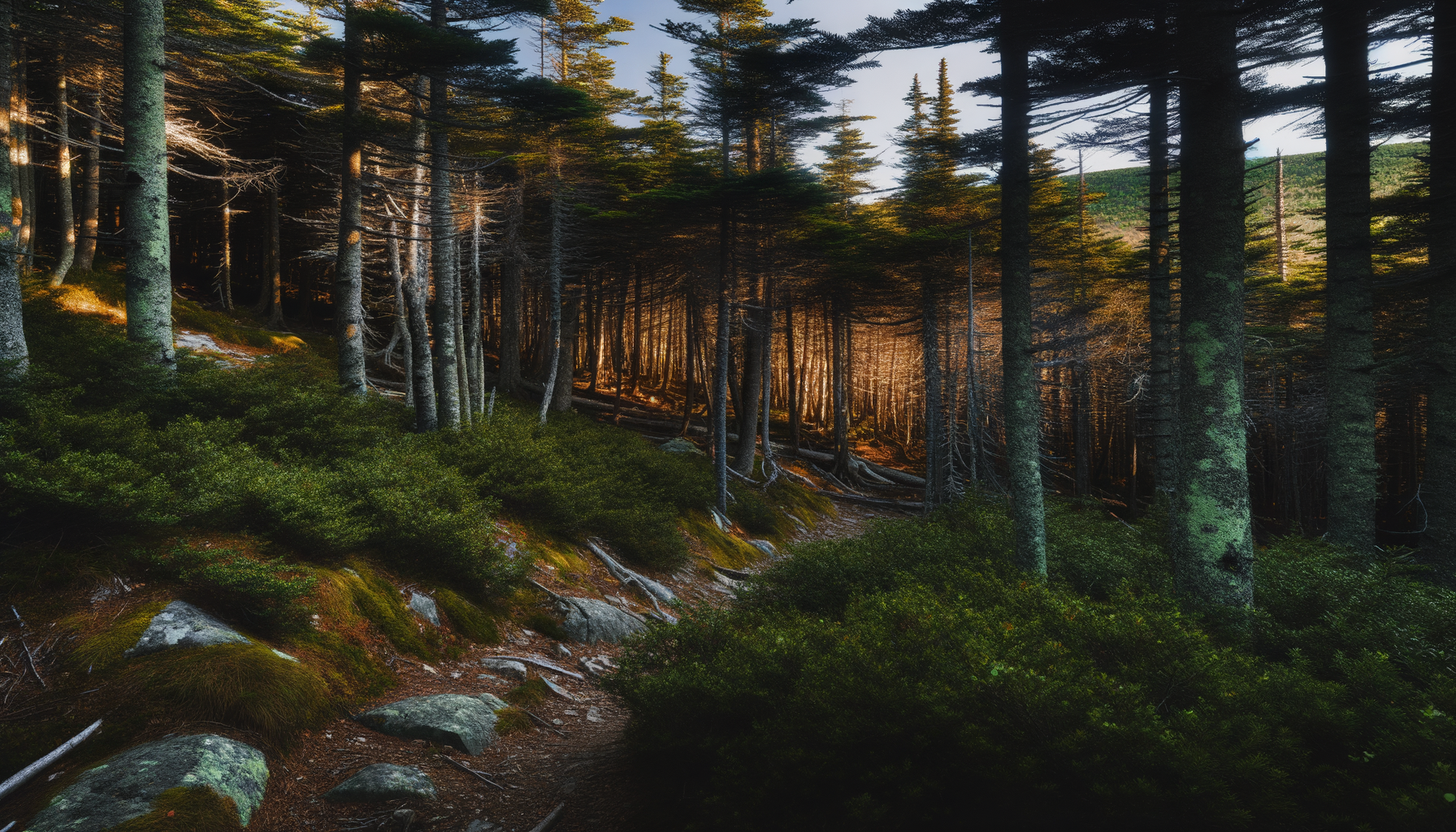
In the wooded trails of New Hampshire and across the rugged terrain of New England’s highlands, a quiet but significant transformation is taking place. It is not driven by policy or technology, but by the deliberate steps of individuals with autism and their families who have found in hiking a medium for connection, resilience, and personal growth. The initiative, known as Autism Hikes!, is not merely a recreational outlet. It is a social experiment in inclusion, a grassroots response to the limitations of conventional therapeutic models, and a testament to the power of nature in fostering human potential.
The origins of this movement trace back to a moment of frustration and serendipity. Mary Kae Marinac, a mother from Andover, Massachusetts, had spent years navigating the complexities of raising twin sons with profound autism. Traditional interventions had yielded limited success, and many activities proved overwhelming due to sensory sensitivities. One weekend, after a failed visit to a family farm, the family stumbled upon Miller State Park in Peterborough. What began as a spontaneous detour up the Marion Davis Trail evolved into a revelation. Her sons, previously agitated and withdrawn, responded with unexpected enthusiasm. They climbed, explored, and later slept peacefully, an outcome that had eluded them for years. Teachers noticed a marked difference in their engagement the following day. This singular experience catalyzed a new approach: hiking as a therapeutic and developmental tool.
Over the years, the family’s commitment deepened. They undertook the formidable challenge of summiting all 48 of New Hampshire’s 4,000-foot peaks, followed by the remaining 19 across New England. This endeavor, spanning more than a decade, was not merely about physical achievement. It was a structured, goal-oriented framework that allowed the twins to develop stamina, coordination, and a sense of accomplishment. For Marinac, the transformation was profound. She began to perceive her sons not through the lens of disability, but through their capabilities. The mountains became a metaphor for their journey, steep, unpredictable, but ultimately surmountable.
The initiative expanded beyond the family unit. Autism Hikes! emerged as a community network, bringing together individuals across the autism spectrum and their families. The group’s composition is diverse, encompassing both high-functioning individuals and those with more profound challenges. Participants describe the hikes as a rare space where social expectations are relaxed, and camaraderie is built through shared experience rather than verbal communication. For some, like Datta Bapatla and Conor Bromley, the hikes offer a sense of belonging that is often elusive in conventional social settings. The natural environment, devoid of artificial stimuli and rigid structures, provides a neutral ground where individuals can engage on their own terms.
This model stands in contrast to prevailing trends in autism support, which often prioritize integration into neurotypical frameworks. Marinac’s approach, informed by personal experience and skepticism toward unsubstantiated medical claims, emphasizes individualized pathways. She has voiced concern over recent political narratives suggesting links between autism and common medications such as Tylenol. Her critique is grounded in empirical observation and a demand for rigorous data. In her view, the discourse around causation often distracts from the more pressing issue of support and representation, particularly for those with profound autism who remain underrepresented in research and policy.
The expansion of diagnostic criteria in recent years has led to a broader understanding of autism, encompassing conditions formerly categorized separately, such as Asperger syndrome. While this inclusivity has benefits, it also raises questions about resource allocation and visibility. Marinac notes that funding and attention often gravitate toward individuals who are more likely to achieve independence, leaving those with severe impairments marginalized. Her sons, for instance, continue to face challenges in basic daily activities and have limited communication abilities. Yet, their proficiency in hiking, a task requiring physical coordination, spatial awareness, and perseverance, demonstrates that capability can manifest in unconventional domains.
This reframing of ability is not merely anecdotal. It aligns with broader discussions in disability studies and social psychology, which advocate for a strengths-based approach. By focusing on what individuals can do, rather than what they cannot, support systems can become more adaptive and empowering. Hiking, in this context, is not a cure or a substitute for medical intervention. It is a complementary practice that fosters autonomy, self-esteem, and social integration. The physical exertion, combined with the sensory richness of natural landscapes, offers a therapeutic milieu that is difficult to replicate in clinical settings.
The metaphor of the mountain recurs throughout Marinac’s narrative. One particularly emblematic moment occurred during a hike up Mount Eisenhower, where a warning sign cautioned against proceeding in poor weather. Her son Will, typically challenged by motor planning, responded not with hesitation but with determination. He ran toward the summit, compelled by the sight of the cog railway and the clear sky. This act, spontaneous and unprompted, encapsulated the essence of the initiative: the unlocking of latent potential through exposure to challenge and beauty.
Autism Hikes! is not a panacea, nor does it claim to be. It is a localized, experiential model that offers insights into how alternative environments can support neurodiverse individuals. Its success lies in its simplicity and authenticity. There are no elaborate protocols or expensive equipment, just trails, trees, and the willingness to walk together. In a region known for its natural splendor, this initiative harnesses the landscape not as a backdrop, but as an active participant in human development.
As debates around autism continue to evolve, with competing theories and shifting diagnostic frameworks, the experience of Autism Hikes! offers a grounded perspective. It reminds us that support need not always be complex or institutional. Sometimes, it is found in the quiet rhythm of footsteps on a forest path, in the shared silence of a summit view, and in the recognition that every individual, regardless of diagnosis, possesses a unique capacity to engage with the world.