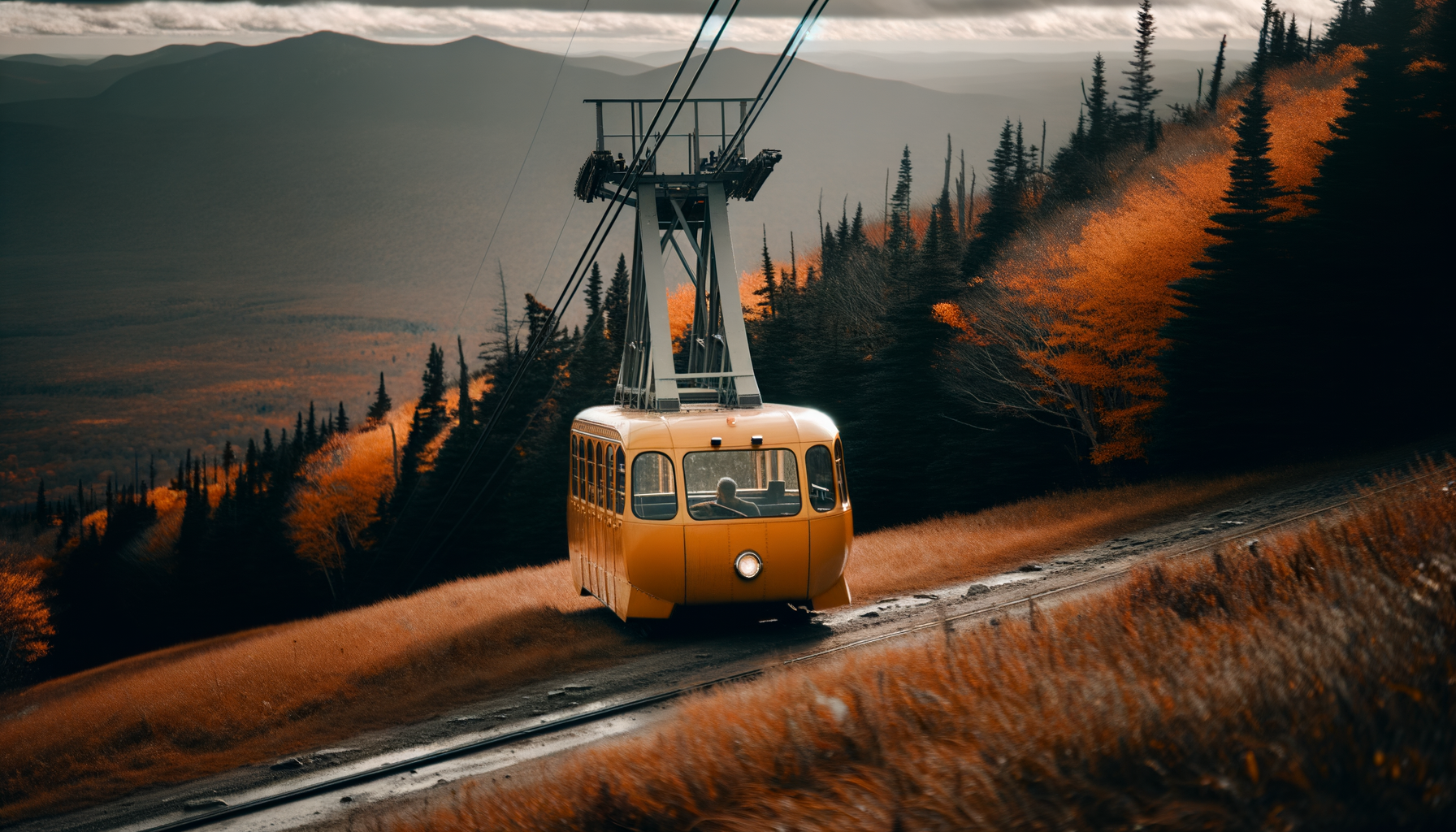
On a crisp October afternoon, the final ascent of Cannon Mountain’s aerial tramway marked the end of a chapter that has spanned generations. As the mustard-yellow car glided through the thinning veil of autumn mist, passengers leaned into the windows, eyes tracing the familiar contours of Franconia Notch. The tram, affectionately known as “Mustard” and its twin “Ketchup,” made its last scheduled run on Sunday, October 26, closing a 45-year legacy of lifting visitors to the summit of one of New Hampshire’s most storied peaks. The moment was not just a farewell to a mode of transport, but a gentle goodbye to a rhythm of mountain life that has shaped the region’s identity for decades.
Constructed in 1980 as the second generation of the original 1938 tramway, the first of its kind in the United States, the Cannon Mountain tram has carried over nine million passengers to the 4,080-foot summit. For many, the ride was more than a scenic lift; it was a ritual, a passage into the high country where granite cliffs meet the sky and the wind carries the scent of balsam and birch. The tram’s retirement, announced earlier this year, was met with a mix of nostalgia and understanding. “She’s aged gracefully,” said Cannon Mountain’s general manager, Jace Wirth, in July, “but like all legends, she deserves a dignified retirement.”
That dignity was palpable in the final weekend of operations. Families bundled in fleece and flannel gathered at the base station, some with cameras, others with quiet reverence. The cars, painted in their iconic condiment hues, moved slowly up the cables, each trip a symbolic gesture of closure. Riders sang songs, shared stories, and took selfies, but beneath the celebration was a deeper current of reflection. For longtime residents of the North Country, the tram was a fixture of seasonal change, a sentinel watching over leaf peepers in October and skiers in February. Its departure signals not just the end of a mechanical era, but a shift in how we relate to the mountains themselves.
Plans are already underway for a third-generation tram, with $27.2 million approved by the New Hampshire Legislature for its construction. The new system promises modern engineering and improved efficiency, but it will inevitably carry a different spirit. Technology evolves, and so do the ways we experience nature. Yet there is something irreplaceable about the slow, deliberate climb of the old tram, the way it allowed passengers to feel the mountain’s presence rather than simply observe it. In a time when speed and convenience often dominate, the tram’s gentle pace offered a rare moment of stillness.
For environmentalists and conservation-minded locals, the tram’s retirement also invites a broader conversation about stewardship and sustainability. Cannon Mountain sits within Franconia Notch State Park, a protected corridor of alpine and forest ecosystems that are increasingly vulnerable to climate change and human impact. The tram, by concentrating visitor access to a single route, helped minimize erosion and habitat disruption. Its replacement must continue that legacy, balancing accessibility with ecological sensitivity. As we build new infrastructure, we must ask not only how it serves us, but how it serves the land.
There is a quiet poetry in the way the tram’s story mirrors the cycles of nature. Like the leaves that blaze and fall, the tram had its season. It rose, it carried, it descended. And now, it rests. The final descent on Sunday afternoon was met with blowing snow, a reminder that winter waits just beyond the horizon. Inside the car, passengers huddled together, sharing warmth and memory. Some spoke of childhood rides, others of first dates or family traditions. One rider, Allan Girard of Littleton, described the moment as “a mix of joy and loss,” a sentiment that echoed through the crowd.
In the weeks to come, the cables will be dismantled, the towers removed, and the station quieted. But the mountain remains. Its granite face will still catch the morning light, its trails will still wind through spruce and fir. And in the minds of those who rode the tram, the memory of that ascent, slow, steady, and soaring, will endure. For some, these trails offer transformative experiences that extend far beyond recreation. The new tram will rise in time, and with it, a new generation of summit seekers. But for now, the mountain breathes in silence, holding the echoes of a thousand journeys.
As a student of environmental studies and a native of the Upper Valley, I find myself drawn to the deeper resonance of this moment. The tram’s retirement is not just a logistical update; it is a reflection of how we mark time in the natural world. It reminds us that even the most enduring structures are subject to change, and that our relationship with the land is always evolving. In honoring the past, we make space for the future. And in saying goodbye, we reaffirm our commitment to the mountains, the forests, and the quiet places that shape our lives.
So as the last tram car disappears into the mist, let us remember what it carried, not just people, but stories, traditions, and a shared reverence for the heights. Let us carry that spirit forward, into new designs, new seasons, and new ways of connecting with the land. The summit is still there, waiting. And the journey, though different, continues.