The lights at the Hop flickered back to life. Not just bulbs and beams, but something older. Something that had been waiting. A pulse. A breath. A memory. And into that glow stepped a figure whose stories have shaped the way millions see themselves. She walked in like she’d never left. Like the building had been holding its breath for her return.
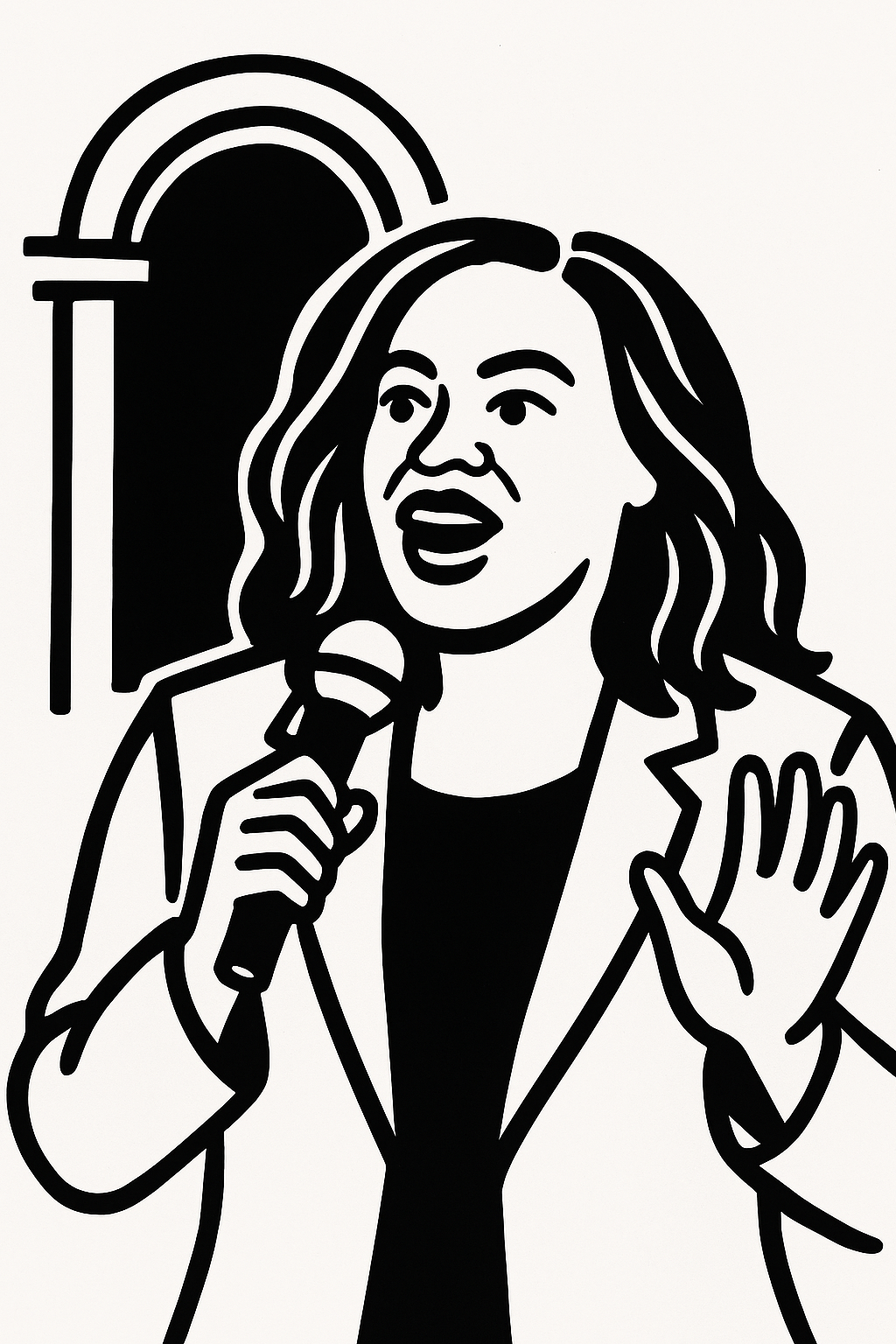
On October 16, the Hopkins Center for the Arts reopened its doors with a weekend of celebration, and at its heart was a conversation. Not a lecture. Not a performance. But a moment of shared language. Shonda Rhimes, Class of ‘91, Emmy-winning creator, producer, and author, returned to Dartmouth with her memoir’s tenth-anniversary tour, “Year of Yes.” The event, held at the Top of the Hop, was more than a book talk. It was a homecoming. A reckoning. A soft kind of revolution.
She sat across from Professor Roopika Risam, film and media studies, and spoke with the kind of clarity that comes from having lived through the noise. Through the doubt. Through the silence that follows a “no.” And the chaos that follows a “yes.” Rhimes didn’t just recount her journey. She re-entered it. She let us walk through it with her. The room felt like a page being turned.
“Dartmouth is home to me now,” she said. And it didn’t feel like nostalgia. It felt like truth. Like the kind of truth that doesn’t need embellishment. She called it her “happy place.” A phrase that might sound simple, but in her voice, it carried weight. It carried the memory of a young woman learning to write herself into the world. Learning to say yes to the things that scared her. And no to the things that didn’t serve her.
The Hop, newly expanded with the Daryl and Steven Roth Wing, shimmered with possibility. Its reopening marked a new era for the arts at Dartmouth, and Rhimes’ presence was a kind of benediction. A reminder that art is not just what we make. It’s what we survive. What we choose. What we say yes to.
The memoir itself, “Year of Yes,” is a chronicle of transformation. Of a woman who had built an empire of stories but had stopped telling her own. Who realized that saying no had become a habit. A shield. And who decided, one year, to say yes. To everything. To speaking in public. To playing with her children. To being seen. The book is not a manual. It’s a mirror. And in the tenth-anniversary edition, that mirror reflects even more sharply.
At the Hop, Rhimes didn’t just promote a book. She invited us into a practice. A ritual of choosing. She spoke of fear not as an enemy but as a compass. Of creativity not as a gift but as a muscle. She described writing as a way of breathing. Of staying alive. And she reminded us that saying yes is not always loud. Sometimes it’s quiet. Sometimes it’s a whisper in the dark.
The audience, mostly students, leaned in. Not just physically, but emotionally. There was a kind of collective exhale. A recognition. Many of us had read her work before we knew her name. Had watched her characters fall apart and rebuild. Had seen ourselves in their mess. Their brilliance. Their contradictions. And now, here she was. Not behind a screen. Not in a writer’s room. But in front of us. Whole. Honest. Unafraid.
She spoke of Dartmouth as the place where she first felt like a writer. Not because someone told her she was. But because she wrote. Because she kept writing. Because the words wouldn’t stop. That kind of origin story doesn’t come with fanfare. It comes with late nights. With rejection. With the quiet thrill of finishing a sentence that feels like truth.
The Hop’s reopening was filled with performances, dedications, and celebration. But Rhimes’ talk was the heartbeat. The moment that reminded us why we build spaces like this. Not just to showcase art. But to make room for it. To make room for the people who carry it. Who shape it. Who return to it, years later, and say, “This is where I began.”
Outside, the Connecticut River moved slowly. Inside, something shifted. The walls of the Hop, now gleaming with renovation, held the echoes of a story still unfolding. Rhimes didn’t offer easy answers. She offered questions. What are you afraid of? What have you been saying no to? What would happen if you said yes?
The book signing that followed was quiet, reverent. Students clutched copies of “Year of Yes” like talismans. Some cried. Some laughed. Some stood in silence, unsure of what to say. And Rhimes met each of them where they were. With grace. With presence. With the kind of generosity that doesn’t need to be performed.
The Hop will host many more events. Many more artists. But this one will linger. Not because of celebrity. But because of connection. Because of the way Rhimes made the room feel like a story we were all part of. A story still being written.
Saying yes is not a slogan. It’s a practice. A risk. A kind of art. And on that October afternoon, in a building reborn, Shonda Rhimes reminded us that the most powerful stories begin not with certainty, but with choice.